
A trading post tucked into the reeds at the edge of a marsh, with the quiet sound of water and rustling plants always in the background.
Trade is steady but unassuming — a quiet post where travellers passing through the fens might stop for supplies, news, and quiet company.
The building is made of dark timber and mossy stone, weathered by years of damp and age but still solid. A crooked iron post above the door holds a weathered wooden sign carved with the shape of a cup and a single reed, faded silver leaf clinging in the grooves.
A small wooden porch, crooked and slightly sunken into the mud, sits at the entrance. A couple of battered stools rest against the wall beneath the overhang — a place where regulars sit and watch the road.
Reeds and ivy creep up the sides of the building, and a narrow, worn path leads from the side door toward the water’s edge. The trail is uneven, shaped by years of footsteps, and ends at a single lantern hanging from a post, its light catching on the dark water beneath.
Inside, the room is dimly lit by iron sconces and a few scattered lanterns. The floor is uneven and covered with mismatched, tattered rugs. The air smells of peat smoke from a low hearth in one corner, where a kettle sits warming. Worn wooden benches sit along the walls.
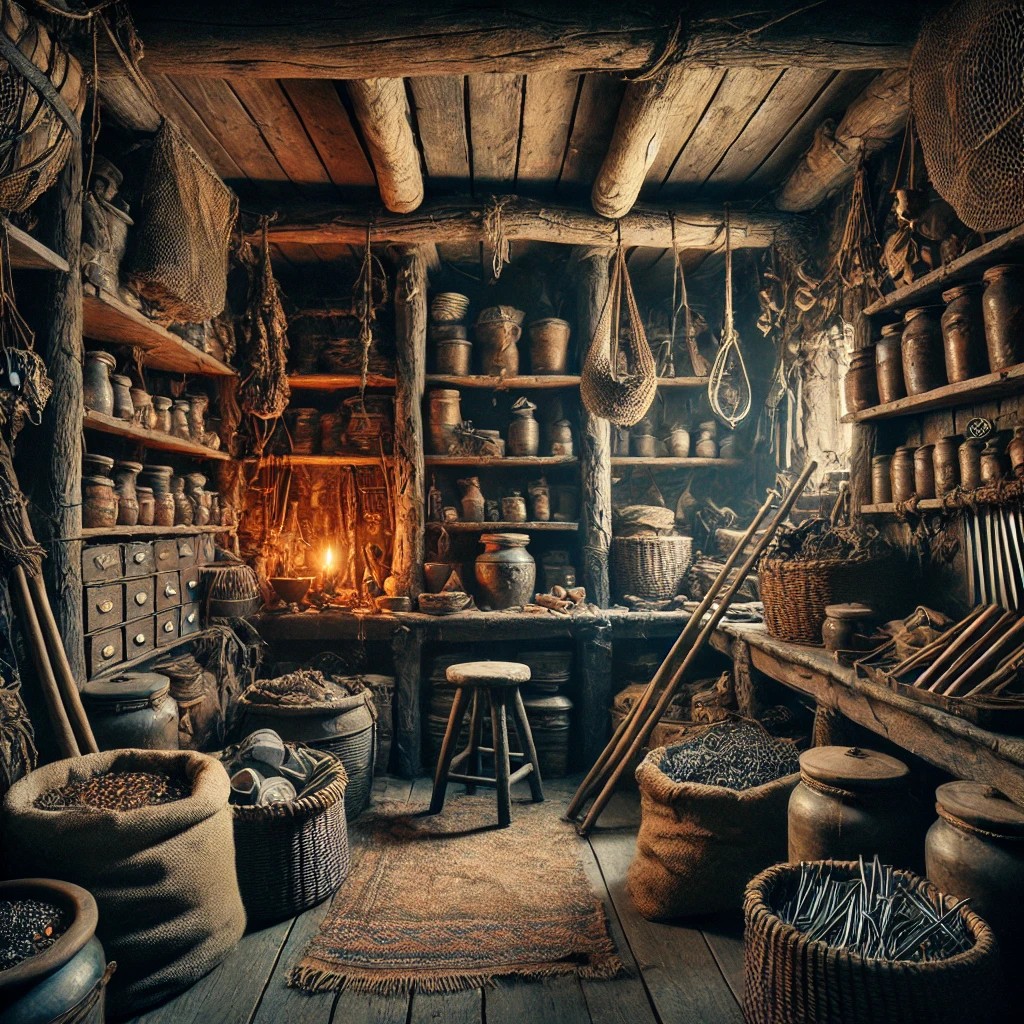
Shelves hold earthenware jars, cloth-wrapped parcels, and bundles of rope and fishing line. There are bins of iron nails, knives, and arrowheads, and lengths of leather and waxed cloth hanging from pegs along the walls.
Simple wooden signs and carvings on the beams signal types of trade — a silver coin, a lock and key, a scratched outline of a fishhook.
Conversation is muted — the low murmur of quiet dealings mixed with the clink of coin.

Caelan Reed, the owner, is one of the few people who seems to know the rhythms of the fens, watching the weather and the water’s edge like he can hear something no one else can.